 English
Twelve questions to connect condition monitoring with practical maintenance and purchasing decisions.
AI-assisted maintenance and connected asset management are attracting attention, but useful decisions still depend on reliable measurements, understood configurations and people who can act on the evidence. For a plant operating a Bently Nevada 3500 system, readiness starts with the installed rack—not with a software slogan. These twelve questions help maintenance engineers and MRO buyers connect condition monitoring with practical spare-parts and recovery planning.
Define the operational problem before specifying an upgrade or buying modules. A machinery-protection function responds through the approved protection design. Diagnosis investigates why machine behavior has changed. Maintenance planning translates the findings into work, resources and purchasing. These activities overlap, but they need different evidence and acceptance criteria. An additional network connection does not automatically improve the protection function.
Preventive maintenance schedules work using defined intervals or usage criteria. Condition-based maintenance uses observed equipment condition to decide whether action is needed. Predictive maintenance uses analysis to anticipate deterioration or a future maintenance need. A threshold alarm alone is not a remaining-life forecast. Keep mandatory inspections and engineering requirements in force while evaluating whether condition evidence can improve other maintenance decisions.
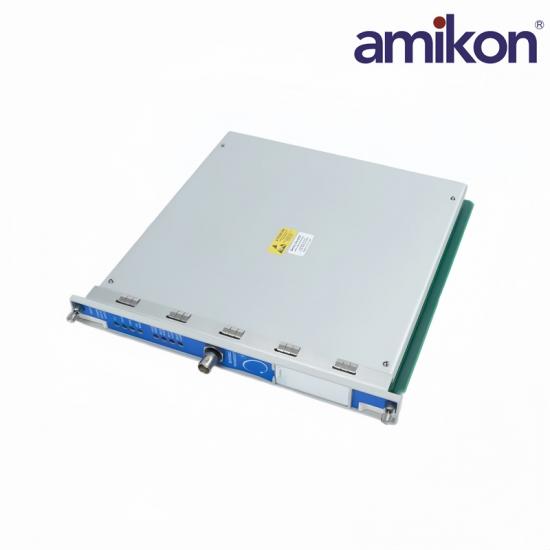
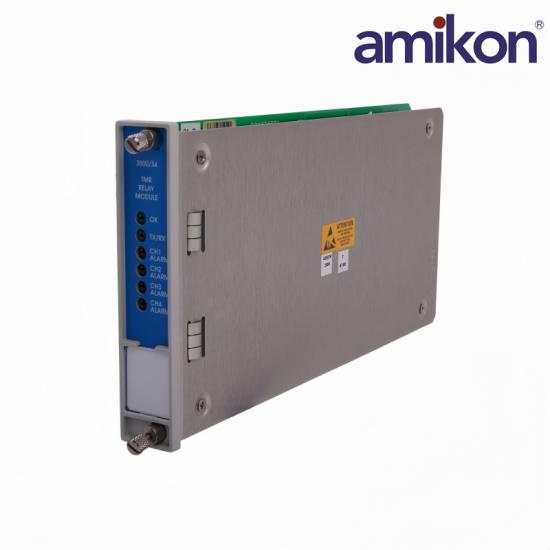
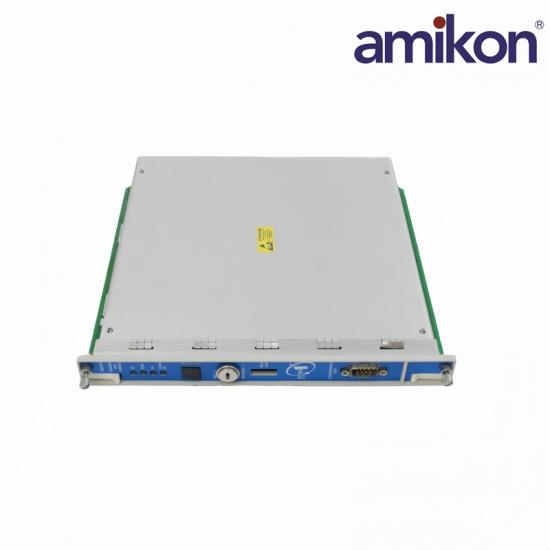
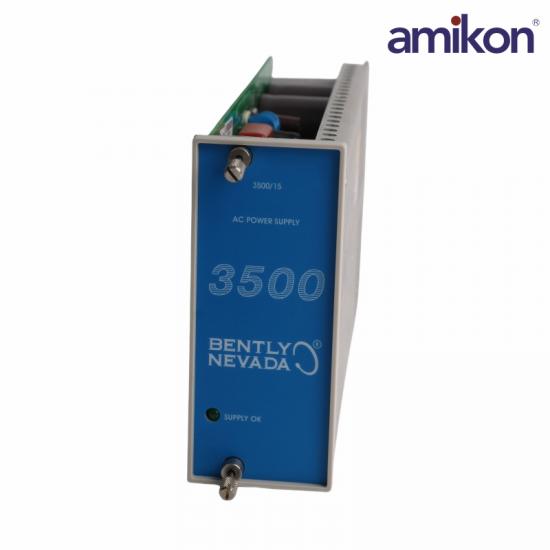
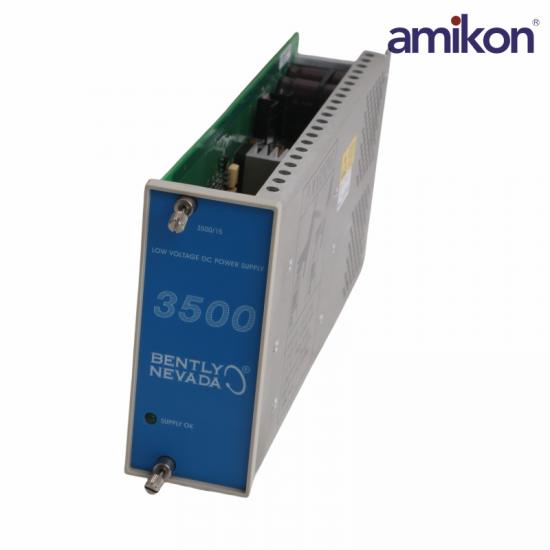
Build a rack inventory rather than relying on the family name. The manufacturer’s system datasheet distinguishes supplies, monitors, interfaces and I/O. In the selected listings, 3500/15 refers to rack power, 3500/22M to the transient data interface, 3500/92 to a communication gateway, 3500/34 to TMR relay equipment and 3500/53 to overspeed detection. These are different functions, not interchangeable spare modules. Record the actual measurement monitors and connected sensors separately.
A catalog page is not a bill of materials for a complete operational system. Confirm whether the quotation covers a main module, rear I/O, an assembly or an individually supplied spare. Product photographs support identification but do not establish the supplied scope.
Review the sensor identification, wiring references, channel assignment, configured measurement and recent signal-quality history. Have qualified personnel investigate unexpected changes using the applicable procedures. Check whether an apparent deterioration coincides with a wiring intervention, configuration change or different operating condition. Preserve the evidence before work begins. Procurement should request the exact component identified by the engineering review, rather than assuming that every unstable reading requires a new monitor.
No. An alarm may relate to machine behavior, the measurement chain or the configured alarm criteria. A monitoring-system fault needs its own investigation. Record timestamps, operating speed or load where relevant, alarm messages and available trends. Distinguish a machine alarm from a module or communication indication. Do not suppress protection or change limits simply to clear a notification. The responsible engineering team should decide what additional evidence and approved checks are required.
The 3500/22M datasheet identifies the TDI as an interface to compatible software, including System 1. It describes static data capture as standard, with additional enabling needed for dynamic and high-resolution transient capture. Therefore, verify installed hardware, software compatibility and enabled capabilities before promising waveform access. Do not treat a 3500/92 gateway connection as proof of an equivalent diagnostic-data path.
Record network settings, access responsibilities, software versions and relevant licenses. Apply the site’s approved network and change-control requirements. Define which data must be available, who will review it and how loss of the diagnostic connection will be reported. Confirm the scope with the current documentation for the actual installation.
Start with consistent channel names, reliable timestamps, meaningful historical records and operating context. Bently Nevada’s System 1 turbomachinery discussion describes diagnostic tools and rule-based analysis; those capabilities should not be relabeled as a universal AI prediction guarantee. Any proposed analytics project should define the failure modes, evidence requirements and review process before purchase.
Begin with a bounded asset or use case. Establish how false indications and missed events will be assessed, and how model or rule changes will be reviewed. A 3500 spare-parts order alone does not deliver that workflow.
Prioritize consequences, not popularity. Review production impact, existing approved stock, redundancy, recovery complexity and supply uncertainty together. Redundancy may improve resilience, but it does not remove the need to assess a degraded condition. The following are assessment prompts, not a universal stocking order.
Specify the complete ordering reference, spare part number, hardware revision and applicable firmware. For example, the two listed 3500/15 references end in different option codes; do not discard those suffixes or assume equivalence. For 3500/22M 138607-01, confirm the installed generation, associated I/O and required software support. The family description cannot settle those checks.
Request written confirmation of identity, condition, included items and available records. Resolve differences with engineering before accepting the offer. A supplier’s current availability statement should be dated; it is not a permanent stock or delivery commitment.
Use the manufacturer’s document index to identify the correct manuals, then obtain the revisions applicable to the equipment. Confirm that a backup can be accessed and used by the authorized team. An old file with an unclear origin is not a validated recovery plan. Store procurement records alongside the technical requirement so receiving staff can recognize an unexpected revision.
Agree acceptance checks before the outage. Depending on the affected equipment, these may address configuration, channel indications, communications and the relevant protection functions. Qualified personnel should follow the applicable manufacturer and site procedures; this article is not a live-replacement instruction. Record the installed identity and results, resolve discrepancies, and obtain the required release before returning equipment to operation. A cleared alarm or a successful network connection alone is insufficient evidence of complete recovery.
Bently Nevada has published a commitment to the 3500 installed base; that statement does not replace a current status check for a specific part. Do not assume the whole family is discontinued or that a newer module is a direct substitute. Compare acquisition, storage, engineering, transport and recovery costs without inventing savings or restoration times. The appropriate decision must preserve the applicable protection and engineering requirements.
Send the complete label, part number, revision and required scope. The family number alone may not identify the required main module and I/O combination.
Do not assume so. Gateway integration and TDI diagnostic-data functions serve different requirements. Have engineering verify the intended architecture and documentation.
Confirm the exact installed arrangement and the quoted scope. Ask engineering to verify the applicable supply and input-module combination before ordering either item.
Yes. Inspect identity, condition, available storage history and documents, then complete the applicable engineering acceptance process. Unused condition does not establish compatibility.
No. Confirm the assembly scope, associated equipment and approved application design. An individual part listing is not a complete protection-system specification.
Provide the full reference, label photos, quantity, installed system information, required condition and destination. Ask for written confirmation of identity, scope, availability and proposed dispatch.
Browse the Bently Nevada category and these six related listings. Confirm the exact offered configuration and scope; these components are not interchangeable. The entries were recently updated in our catalog, which does not establish a manufacturer release date or real-time availability.
Swipe or scroll horizontally to view all six products →
Manufacturer references reviewed: 22 October 2026. Apply the current documentation for your installed configuration. Amikon is an independent supplier and is not an authorized Bently Nevada distributor. Product names and trademarks belong to their owners.

Get regular updates and real automation insights straight to your inbox.


 IPv6 network supported
Disclaimer: Amikon sells new and surplus products and develops channels for purchasing such products. This website has not been approved or recognized by any of the listed manufacturers or trademarks. Amikon is not an authorized distributor, dealer, or representative of the products displayed on this website. All product names, trademarks, brands, and logos used on this website are the property of their respective owners. The description, explanation, or sale of products with these names, trademarks, brands, and logos is for identification purposes only and is not intended to indicate any association with or authorization from any rights holder.