Blog

Home

Blog

Bently Nevada Reciprocating Compressor Monitoring: Selecting Orbit DCM, 3500/70M and 3500/72M
November 13 , 2026
AMIKON / TECHNICAL JOURNALMACHINERY HEALTH   /   FIELD GUIDE 03

BENTLY NEVADA / RECIPROCATING COMPRESSORS

Every signal.
A different
part of the story.

Orbit DCM, 3500/70M and 3500/72M:
select the monitoring role before the replacement part.

Compare the monitoring roles
RECIPROCATING COMPRESSORMEASUREMENT MAP

Conceptual layout / not to scale

01 / FRAME & CRANKCASE

Trend structural vibration.

3500/70M · Recip Velocity / Low Frequency Recip Velocity

Explore vibration monitoring ↗
02 / CROSSHEAD

Look for changing impacts.

3500/70M · Impulse Acceleration / Acceleration 2

Explore impact monitoring ↗
03 / PISTON ROD

Track position and movement.

3500/72M · Proximity-transducer inputs

Explore rod position monitoring ↗
04 / CYLINDER

Add pressure context.

3500/77M · Dedicated cylinder pressure monitoring

Explore combined analysis ↗

Bently Nevada Reciprocating Compressor Monitoring: Selecting Orbit DCM, 3500/70M and 3500/72M

Reciprocating compressor monitoring starts with identifying what needs to be measured: mechanical impact, frame vibration, piston rod movement or cylinder pressure. Each measurement answers a different question, and selecting a replacement module requires checking the complete signal chain.

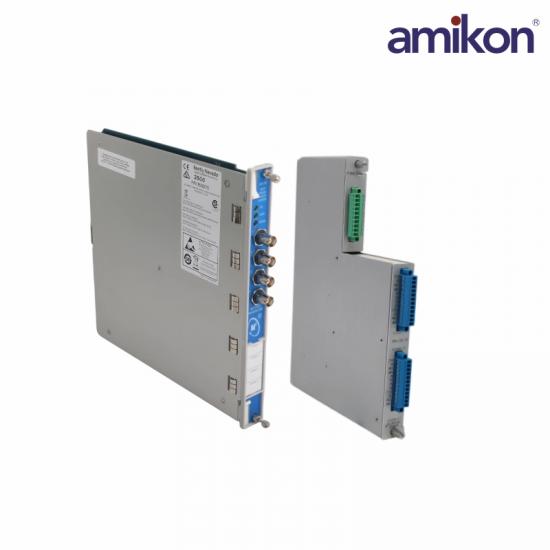
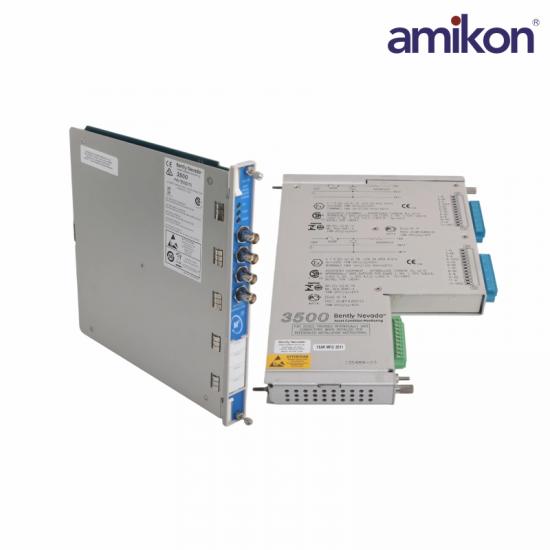
For customers sourcing through Amikon, relevant products include 3500/70M 176449-09+135489-01, 3500/70M 176449-09+135489-03 and 3500/72M 176449-08. Understanding their different inputs and applications helps buyers specify the correct monitor, rear I/O and associated sensors.

01

ARCHITECTURE

What Does Orbit DCM Bring to Reciprocating Compressor Monitoring?

CONDITION MONITORING

Orbit DCM

Continuous monitoring for high-speed API 11P compressors and other reciprocating assets where a distributed installation is appropriate.

Pressure + vibration + rod measurements + timing
PROTECTION ARCHITECTURE

3500 / Orbit 60

Established protection architectures for large, critical API 618 compressor applications. Define protection requirements before selecting the system.

Machine criticality + protection requirements + diagnostic objectives

In its technical article, Baker Hughes describes how Orbit DCM combines cylinder pressure, crosshead acceleration, frame vibration, piston rod measurements and timing references. Evaluating these signals together provides more context than reviewing a single vibration trend.

The article distinguishes two application priorities. Large, critical API 618 compressors continue to rely on established protection architectures such as the Bently Nevada 3500 and Orbit 60 systems. Orbit DCM extends continuous condition monitoring to high-speed API 11P compressors and other reciprocating assets where a distributed installation is appropriate.

Synchronized measurements and System 1 integration help maintenance teams compare pressure, vibration and operating conditions when investigating an event. For equipment owners, the selection therefore starts with machine criticality, protection requirements and diagnostic objectives.

02

IMPACT & VELOCITY

How Does the 3500/70M Monitor Crankcase and Crosshead Vibration?

The 3500/70M Recip Impulse Velocity Monitor provides four channels for compressor crankcase and crosshead vibration monitoring. Its configurable functions include:

  • Impulse Acceleration
  • Acceleration 2
  • Recip Velocity
  • Low Frequency Recip Velocity

Channels are configured in pairs: channels 1–2 share a function, while channels 3–4 can use the same or another supported function. This matters when planning a combination of impact and velocity measurements.

The monitor compares configured measurements with alarm settings. Alert limits can be assigned to active static values, with Danger limits available for two active static values per channel. Sensor sensitivity, measurement mode and filtering must match the intended monitoring point. Official 3500/70M datasheet

Amikon lists two specific assemblies for procurement review:

The rear I/O difference between these assemblies is particularly important when replacing an installed unit.

03

ROD POSITION

How Does the 3500/72M Measure Piston Rod Position and Movement?

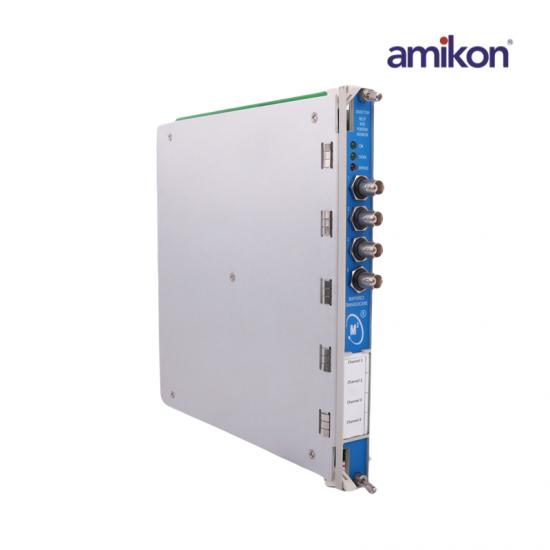
The 3500/72M Recip Rod Position Monitor accepts up to four proximity-transducer inputs and provides static and dynamic position measurements. Depending on configuration, available values include probe gap, position magnitude, peak-to-peak movement and crank-angle-related measurements.

Its supported applications include rod position, rod drop and hyper-compressor monitoring. Like the 3500/70M, its channels are configured in pairs. The required measurement function and software compatibility should be checked against the installed system. Official 3500/72M datasheet

Amikon’s corresponding product listing is the 3500/72M 176449-08 Recip Rod Position Monitor.

Before interpreting rider-band wear

For rider-band wear assessment, rod-position trends need installation context. Record probe orientation, mounting location, initial gap, rod material, operating temperature, load and the baseline after mechanical inspection. The compressor manufacturer’s geometry and interpretation method are also needed before converting measured rod movement into an estimated wear value.

A change in rod position is an investigation trigger; its mechanical meaning depends on these conditions.

04

COMBINED ANALYSIS

How Can Vibration, Rod Position and Timing Work Together?

Baker Hughes identifies crosshead acceleration, frame vibration, piston rod position and a Keyphasor reference as complementary measurements. Crosshead impacts can help reveal developing clearance or looseness problems, while rod measurements provide information about movement and rider-band condition. A timing reference relates events to crank position. Official reciprocating compressor monitoring brochure

In practice, useful investigation scenarios include:

ApplicationSuggested analysis approach
Refinery hydrogen compressorCompare a changing impact trend with rod movement at similar operating loads.
Natural gas processing compressorCheck whether vibration changes follow speed, loading or a persistent mechanical trend.
Chemical process compressorReview gradual position changes alongside maintenance history and operating conditions.

These are diagnostic starting points, rather than automatic fault classifications.

Where cylinder pressure is also required in a 3500 installation, the 3500/77M provides the dedicated pressure-monitoring function. Amikon lists the 3500/77M Cylinder Pressure Monitor. Official 3500 system datasheet

05

SENSORS & I/O

Selecting Sensors, Rear I/O and Replacement Parts

3500/70M ASSEMBLY / INTERNAL BARRIERS

Four Prox/Accel inputs.

176449-09 + 135489-01

Internal terminations. Confirm the accelerometer configuration and the installed sensor signal requirements.

View 3500/70M 176449-09+135489-01 ↗
3500/70M ASSEMBLY / INTERNAL BARRIERS

Four Velomitor inputs.

176449-09 + 135489-03

Internal terminations. Confirm the Velomitor configuration and the installed sensor signal requirements.

View 3500/70M 176449-09+135489-03 ↗

For the 3500/70M, identify the installed sensor type first. Baker Hughes illustrates the 330425 accelerometer for crosshead monitoring and the 190501 Velomitor CT for frame vibration. These are application references; the complete sensor configuration still needs verification. Official application reference

The rear I/O options explain an important distinction between Amikon’s two listed assemblies:

Rear I/O part numberDocumented input arrangement
135489-01Internal barriers and internal terminations; four Prox/Accel inputs
135489-03Internal barriers and internal terminations; four Velomitor inputs

The complete assembly must match the required sensor arrangement. Official 3500/70M ordering information

01 / SENSINGProximity probe02 / LENGTH330130 cable*03 / CONDITIONING330180 Proximitor04 / MONITORING3500/72M + I/O

* Extension cable where required by the selected measurement chain. Verify the complete probe configuration and total system length.

For the 3500/72M, verify the complete proximity measurement chain. A typical 3300 XL arrangement includes the probe, extension cable where required, and Proximitor sensor. In the 8 mm family, this involves compatible probe configurations, 330130 extension cables and 330180 Proximitor sensors.

Match the probe family, total system length, target material calibration, linear range and output scale factor. A mechanically suitable probe still needs the correct electrical configuration. Official 3300 XL 8 mm datasheet

For 3500/72M rear I/O, documented options include 140471-01 internal termination, 140482-01 external termination and 135489-01 internal-barrier configurations. External termination blocks and cables require separate ordering where applicable. Official 3500/72M ordering information

Before requesting a replacement, provide photographs of both the front module and rear I/O labels, including approval markings and any modification numbers.

06

REQUEST A QUOTE

Request a Quote from Amikon

For a quotation on 3500/70M, 3500/72M or associated monitoring components, please provide:

If the model is uncertain, send clear nameplate photographs and describe the compressor and measurement point. Specify whether the requirement covers the front monitor only, the rear I/O only or a complete assembly.

YOUR AMIKON CONTACT

Frida.

Share the complete identification.
Build a clearer quotation.

Contact Frida — Amikon

Email: sales17@amikon.cn WhatsApp: +86 15359408275

Request a Quote from Amikon

Availability, supply scope and delivery timing will be confirmed against the requested configuration.

Email Frida
AMIKON TECHNICAL JOURNALBack to top ↑

Disclaimer: Amikon sells new and surplus products and develops channels for purchasing such products. This website has not been approved or recognized by any of the listed manufacturers or trademarks. Amikon is not an authorized distributor, dealer, or representative of the products displayed on this website. All product names, trademarks, brands, and logos used on this website are the property of their respective owners. The description, explanation, or sale of products with these names, trademarks, brands, and logos is for identification purposes only and is not intended to indicate any association with or authorization from any rights holder.

Leave A Message

Leave A Message
If you have any questions please do not hesitate to contact us, we are 24 hours online for you to answer!
Submit

Home

Products

whatsapp

contact